What Sponsors Expect from a Community Race
Local businesses sponsor community 5Ks and fun runs for three reasons: visibility, goodwill, and direct access to potential customers. When you understand what sponsors actually want from the relationship, your pitch gets stronger, your renewals go up, and your event grows year after year.
Quick Answer
Sponsors expect visible brand placement, clear demographic alignment, professional communication, reliable execution on promised benefits, and a return on their investment — whether measured in new customers, community goodwill, or brand awareness. The most common reason sponsors do not renew is not poor turnout; it is that the race director failed to deliver what was promised.
What Sponsors Actually Want
1. Visible Brand Placement
Sponsors want their logo seen by participants and attendees. This means:
- Logo on the race shirt — The most valued sponsorship benefit. If your sponsor is a title sponsor, their name goes on the shirt.
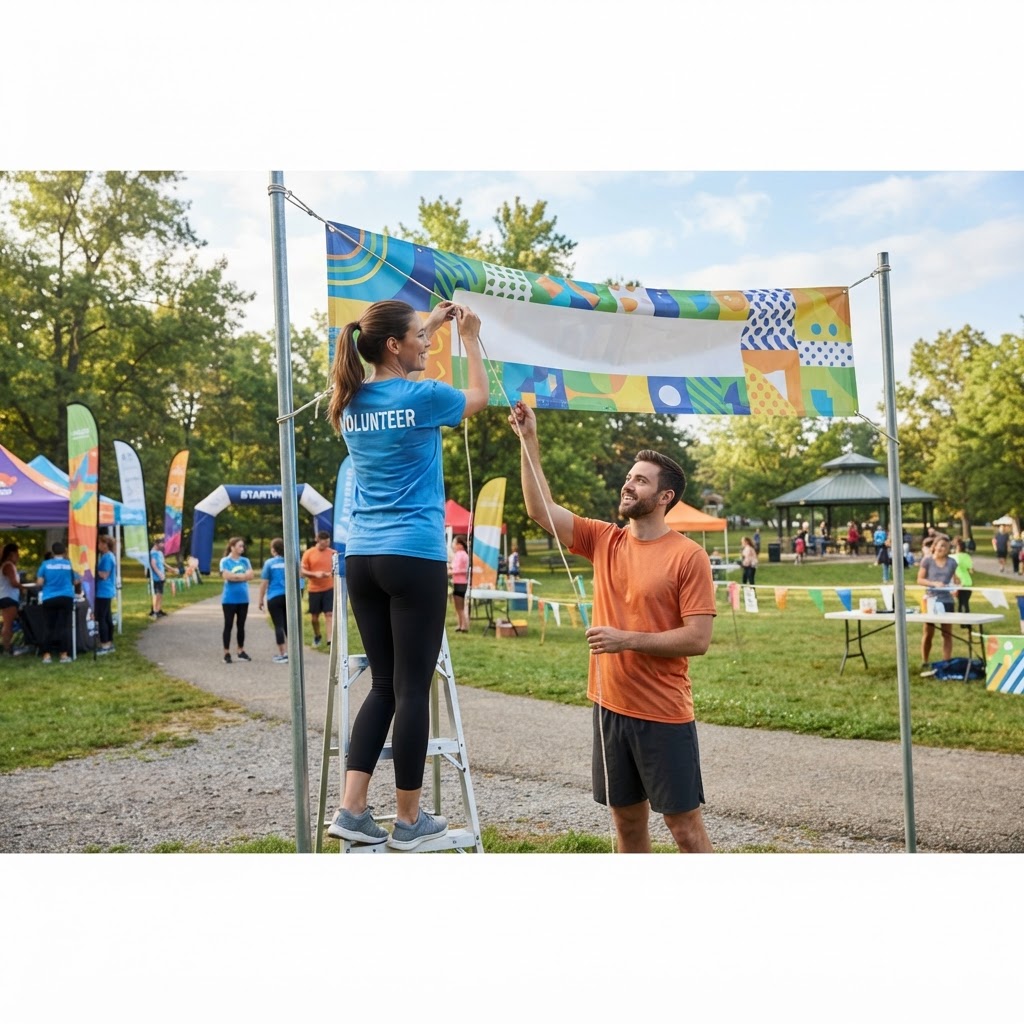
- Banner at the start/finish line — A physical banner at the most photographed spot of the event
- Logo on the race website and registration page — Visible before anyone shows up on race day
- Logo on signage — Directional signs, mile markers, and the finish line arch
What sponsors do not want: A logo buried on a flyer that never gets distributed, or a mention in a social media post with 12 likes.
2. Clear Demographic Alignment
A local running store wants to reach runners. A pediatric dental practice wants to reach families with children. A real estate agency wants to reach neighborhood residents. Your pitch needs to explain who attends your race and why that aligns with the sponsor's target customer.
Prepare a one-page demographic profile:
- Expected number of participants
- Age range of typical runners
- Family-friendly or competitive focus
- Geographic draw (neighborhood, city-wide, regional)
- Social media reach and email list size
3. Professional Communication
Sponsors are business owners and managers who deal with disorganized vendors all day. If you respond to emails within 24 hours, deliver logos to your designer on time, and send a post-race summary with photos and participation numbers, you stand out immediately.
Communication expectations:
- Respond to inquiries within 24 to 48 hours
- Send a confirmation email with all agreed benefits in writing
- Provide a timeline for when logos are needed, banners are due, and proofs will be sent
- Follow up after the race with results, photos, and a thank-you note
4. Reliable Execution on Promised Benefits
This is the number one reason sponsors do not renew. If you promise a logo on the shirt, the logo must be on the shirt — correctly sized, properly placed, and in the agreed color. If you promise a banner at the finish line, the banner must be there and visible.
Common failures that lose sponsors:
- Logo printed too small or in the wrong color on shirts
- Banner placed in a low-traffic area instead of the finish line
- Sponsor name misspelled in announcements or on signage
- Promised social media posts never published
- Booth space assigned in a corner nobody walks past
5. A Measurable Return on Investment
Sponsors want to know their money produced results. This does not always mean direct sales — for many community sponsors, goodwill and brand awareness are the return. But you need to give them something to measure.
What to provide after the race:
- Total participant count
- Demographic breakdown if available
- Photos showing the sponsor's logo placement (shirt, banner, signage)
- Social media engagement numbers (impressions, reach, clicks)
- Anecdotal feedback from participants who noticed the sponsor
Sponsorship Levels That Work for Community Races
Title Sponsor — $1,000 to $3,000+
The title sponsor gets their name in the race title (for example, "Acme Dental 5K for Schools"). Benefits:
- Largest logo placement on shirts and all signage
- Banner at the finish line
- Booth or table at the event
- Logo on the website and registration page
- Mention in all press releases and social media
- First right of refusal for next year
Gold Sponsor — $500 to $1,000
- Logo on shirts (medium size)
- Banner at the start/finish area
- Booth or table at the event
- Logo on the website
Silver Sponsor — $250 to $500
- Logo on shirts (small size)
- Logo on the website
- Mention in race announcements
Bronze or In-Kind Sponsor — $100 to $250 or donated goods/services
- Logo on the website
- Recognition in thank-you social media posts
- In-kind sponsors provide water, food, supplies, or services instead of cash
How to Pitch a Sponsor
Do Your Homework
Before you reach out, research the business. What do they sell? Who are their customers? Have they sponsored local events before? Your pitch should explain why your race audience matches their customer base.
Make a Specific Ask
Do not say "Would you like to sponsor our race?" Say "We are offering a Gold sponsorship at $750 that includes your logo on 200 race shirts, a banner at the finish line, and a booth at the event. Based on your target market of families in the north side, we expect 150 of our runners to be potential customers."
Provide a One-Page Sponsor Deck
Include:
- Race name, date, and location
- Expected participant count
- Demographic profile
- Sponsorship levels and benefits
- Contact information
- Deadline for logo submission
Follow Up
Business owners are busy. Send a polite follow-up email one week after your initial pitch. A phone call two weeks after that is appropriate. Do not be pushy, but do not let the conversation die.
What Sponsors Do Not Want
- Vague promises without specifics on what they get for their money
- Last-minute requests — sponsors need time to approve logos and design materials
- Surprise costs — if there is a setup fee for their booth, tell them upfront
- No post-race follow-up — leaving sponsors wondering if their investment paid off
- Disorganized race day — a chaotic event reflects poorly on every sponsor whose name is on it
Building Relationships That Last
The best sponsorship relationships are multi-year. A sponsor who had a good experience will often increase their commitment the following year. Focus on:
- Delivering everything you promised, on time and correctly
- Sending a professional post-race report within one week
- Personally thanking the sponsor on race day
- Offering early renewal at the same or better rate before you open sponsorship to new businesses
Bottom Line
Sponsors want visibility, alignment, professionalism, and a measurable return. Build clear sponsorship levels, deliver every promised benefit, and follow up with a post-race report. The Race Director Toolkit sponsor tracker helps you manage sponsor contacts, track benefit delivery, and log follow-up notes so no relationship falls through the cracks.
Next step: Get the free 5K planning checklist to start your sponsor outreach plan.
Free checklist for first-time race directors
If you are organizing your first 5K or fun run, start with the free 5K Planning Checklist. Spot the gaps that create stress later: budget surprises, missing volunteers, sponsor deadlines, shirt timing, and race-day communication.
Build the full race plan
Race Director Toolkit turns the checklist into a working plan — budget calculator, sponsor tracker, volunteer planner, vendor coordination, marketing calendar, and race-day command center.
- Race Planner — $147 one-time
- Planner + AI Assistant — $247 one-time
- 10 guided planning modules
- Budget & break-even planner
- Sponsor tracker, volunteer planner, vendor tracker