5K Volunteer Roles: Who You Need and When They Should Arrive
Volunteers are the engine of any community 5K — but showing up is only half the job. The other half is knowing which role each person fills and when they need to be standing at their post. Get this wrong and you'll spend race morning sprinting between the registration tent and the water station yourself.
This guide breaks down every key volunteer role, what they're responsible for, and their exact arrival window so you can build a call sheet that actually works.
Quick Answer: A 5K typically needs 15–40 volunteers depending on event size. Core roles include registration, course marshals, water station crew, finish line team, and parking guides. Most volunteers should arrive 60–90 minutes before the gun goes off — but setup crew and your registration lead need to be on-site 2–3 hours early.
How Many Volunteers Does a 5K Actually Need?
A good rule of thumb: plan for one volunteer per 10–15 participants, plus a dedicated lead for each functional area. Here's a quick breakdown by event size:
- 50–100 participants: 10–15 volunteers
- 100–300 participants: 20–30 volunteers
- 300–500 participants: 35–50 volunteers
Smaller events can double up roles (your water station crew can help with post-race cleanup), but never combine registration with course marshal duties — those two jobs happen at the same time and require full attention.
The Core 5K Volunteer Roles (And What Each One Does)
1. Volunteer Coordinator
Arrival: 3 hours before start
This is your right hand on race day. The volunteer coordinator manages the sign-in sheet for incoming volunteers, distributes vests or t-shirts, handles last-minute no-shows, and floats throughout the morning to fill gaps. If you can only designate one experienced person, put them here. This role should never be assigned to a first-timer.
Key tasks:
- Run volunteer check-in
- Redistribute roles when people don't show
- Carry a printed copy of all volunteer assignments and cell numbers
- Stay until the last volunteer is released
2. Registration / Packet Pickup Team
Arrival: 2.5–3 hours before start
Registration is the first touchpoint participants have on race day — it sets the tone. You need at least 2–4 people here depending on your headcount, and they need time to sort bibs, lay out packets by last name or bib number, and test any barcode scanners or check-in apps before the rush hits.
Key tasks:
- Sort and organize race packets before gates open
- Check in pre-registered participants
- Handle day-of registration (cash box, waivers, bib assignment)
- Field questions about the course and schedule
Pro tip: Assign one person solely to the day-of registration line. Pre-reg and walk-up traffic move at completely different speeds.
3. Course Marshals
Arrival: 60–75 minutes before start
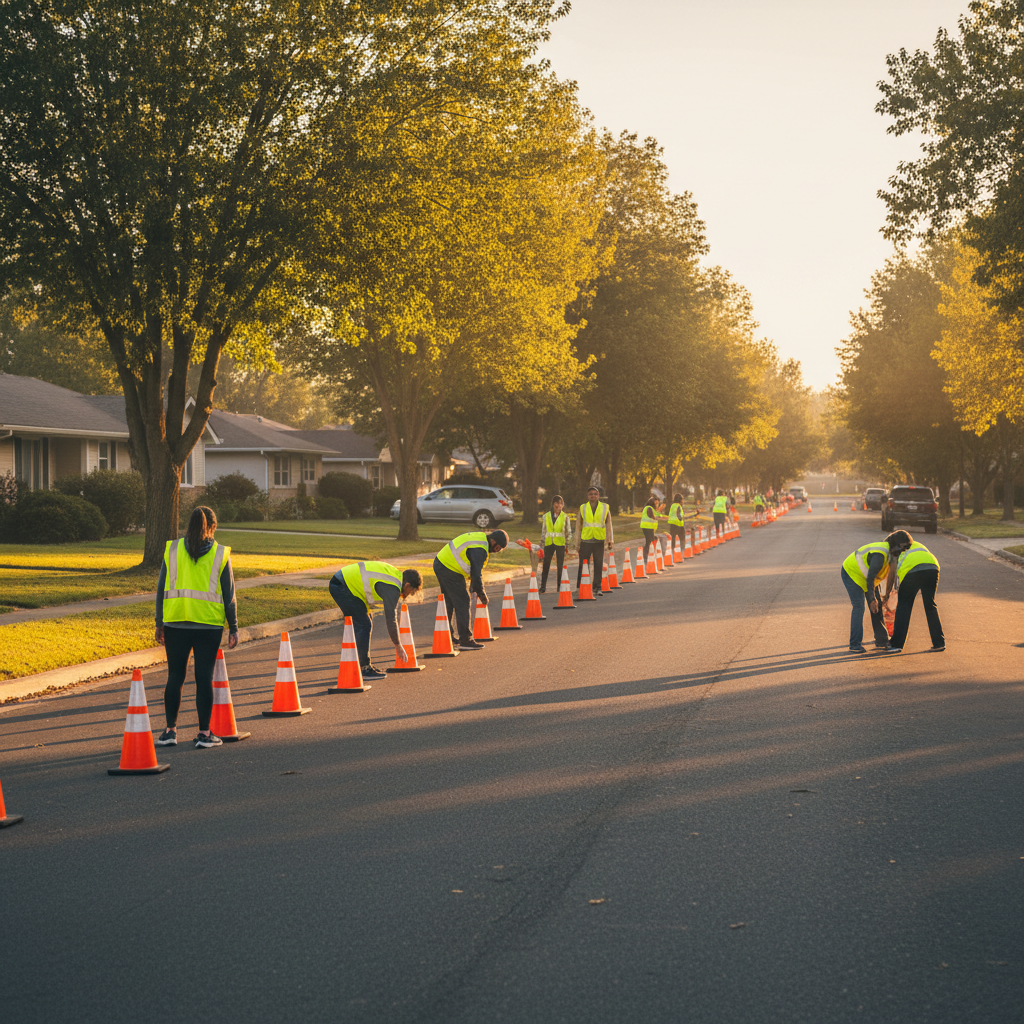
Course marshals stand at turns, intersections, and any point where participants might make a wrong decision. For a standard 5K (3.1 miles), plan for one marshal every quarter to half mile on the course, with extras at any turn or road crossing.
Minimum coverage for a basic out-and-back 5K:
- Start/finish area: 2 marshals
- Each turn: 1–2 marshals
- Mid-course: 1–2 marshals
- Turnaround point: 2 marshals
Key tasks:
- Direct participants at turns with clear, consistent hand signals and verbal cues
- Watch for anyone in distress and radio or call your race director immediately
- Stay at post until the course sweep (last participant or sweep vehicle) passes them
- Never leave their position to help with something else
Brief marshals in person before the race. A walkie-talkie or group text chain keeps communication live during the event.
4. Water Station Crew
Arrival: 75–90 minutes before start
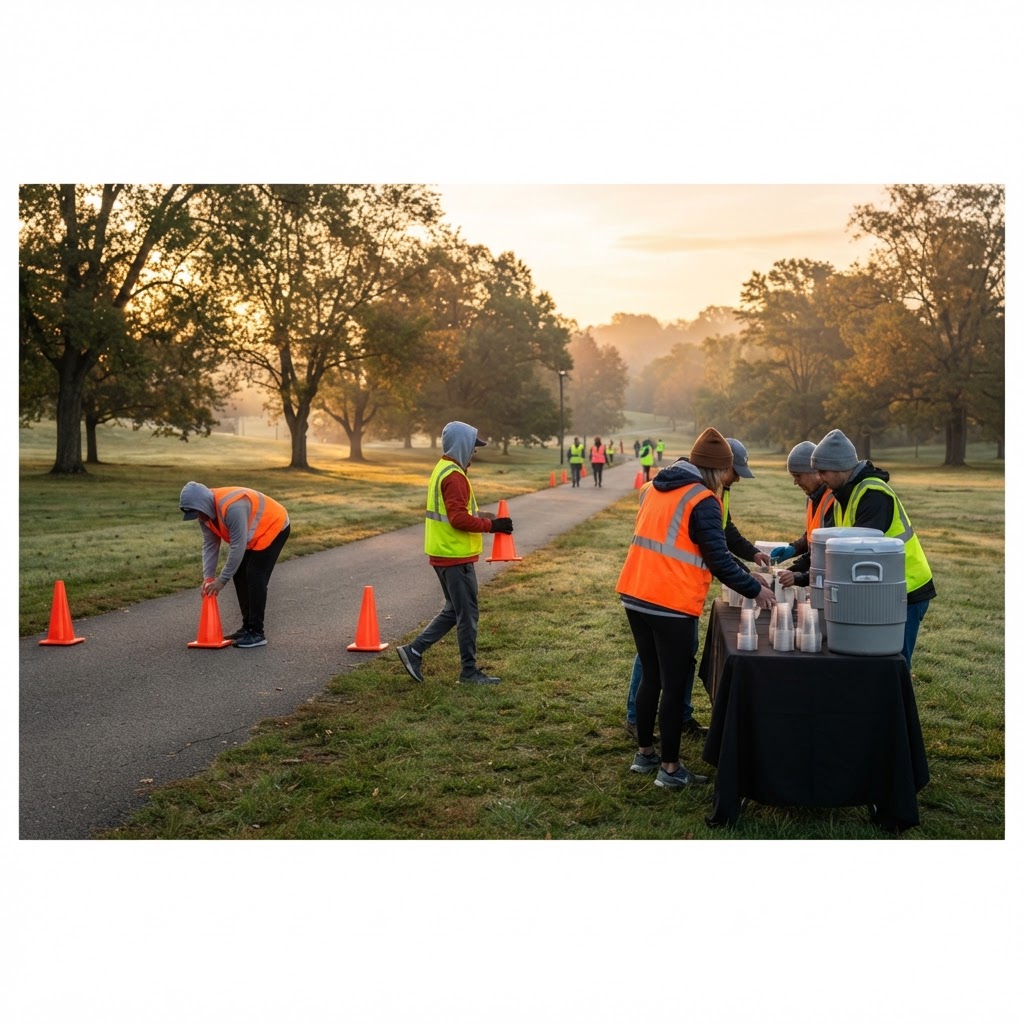
Water stations need setup time — cups need to be pre-filled or staged, tables need to be anchored, and trash bags need to be in place. For a 5K, one water station around the 1.5-mile mark is standard. Larger events or hot-weather races may add a second.
Staff each station with: 2–4 volunteers
Key tasks:
- Set up and anchor tables before participants arrive
- Pre-fill cups or have pitchers ready
- Hand cups to participants (don't just leave them on the table — hand-offs are faster)
- Manage cup trash throughout and after the race
- Break down and pack out all materials after the sweep passes
5. Finish Line Team
Arrival: 90 minutes before start
The finish line is the most operationally complex zone on your course. You need people managing the chute, handing out medals or finisher items, and keeping the flow moving so participants don't bottleneck.
Roles within the finish line team:
- Chute guides (2): Keep participants moving single-file through the chute
- Medal hangers (2–3): Place medals around necks or hand finisher items — keep it moving
- Results/timing liaison (1): Works directly with your timing company or handles manual bib recording
- Medical spotter (1): Watches for anyone who looks like they need attention immediately post-finish
Key tasks:
- Set up finish line arch, banner, and chute barriers before anyone arrives
- Stage medals, finisher shirts, or other items within arm's reach
- Direct participants out of the chute toward food/water and away from the finish line
6. Parking and Traffic Guides
Arrival: 90–120 minutes before start
Participants will start arriving 60–90 minutes before the gun. If no one is directing traffic, you'll have a gridlocked parking lot and frustrated participants before the race even begins.
Key tasks:
- Wear bright vests and carry flags or wands if near traffic
- Know the parking plan cold — where overflow goes, where vendor parking is
- Coordinate with local police or traffic control if your permit requires it
- Stay at post until participant arrival slows (usually 15–20 minutes before start)
7. Sponsor and Vendor Liaison
Arrival: 2–2.5 hours before start
If you have a sponsor expo, booths, or food vendors, someone needs to be on-site to check them in, confirm their assigned space, and handle any setup questions. This volunteer also keeps sponsor areas from encroaching on the race chute or finish line.
Key tasks:
- Greet and check in sponsors and vendors as they arrive
- Confirm table/tent placement matches your site map
- Communicate load-in end time and when the event area opens to participants
- Stay available throughout the morning for vendor questions
8. Post-Race / Cleanup Crew
Arrival: 30 minutes before start (or at a pre-arranged time post-race)
This team is often overlooked until race morning. Assign 4–8 volunteers specifically to cleanup — picking up cups on the course, breaking down tents and tables, collecting signage, and restoring the venue to its original condition. This is a permit requirement at most venues.
Key tasks:
- Sweep the course route for cups, signage, and debris
- Break down all race infrastructure (tents, tables, barriers)
- Collect timing mats, water station equipment, and sponsor materials
- Final walkthrough with venue contact before releasing the site
Race Day Volunteer Arrival Timeline at a Glance
Here's a simple arrival sequence to share with your team:
- 3 hours before gun: Volunteer coordinator, registration team leads
- 2.5 hours before gun: Full registration crew, sponsor/vendor liaison
- 90 minutes before gun: Finish line team, parking guides
- 75 minutes before gun: Water station crew, course marshal team leads
- 60 minutes before gun: All course marshals to their assigned positions
- 30 minutes before gun: Sweep team staged and ready
- Post-race: Cleanup crew activated
Briefing Your Volunteers Before Race Day
Don't wait until race morning to explain roles. Send every volunteer a one-page role sheet at least 48 hours in advance. It should include:
- Their specific role and location
- Arrival time (not a window — a specific time)
- What to wear (your shirt color, comfortable shoes, weather layer)
- Who their point of contact is on race day
- What to do if they have a problem or need to cancel
- The emergency contact number for your race director or coordinator
Hold a 10-minute all-volunteer huddle 45 minutes before the start. Cover safety, communication channels, and where to send anyone who needs medical help. Keep it brief — marshals need to be at their posts.
Recruiting Enough Volunteers
The most common mistake first-time race directors make is underestimating how many volunteers they need and waiting too long to recruit them. Start outreach at least 8 weeks before your race. Sources that work:
- Schools and universities: Service hours, honor societies, athletic clubs
- Corporate sponsors: Some companies offer volunteer days for community events
- Local civic groups: Rotary, Lions Club, church groups, PTOs
- Running clubs: Runners who aren't racing often volunteer
- Prior participants: Email your past registrant list
Always recruit 20–25% more volunteers than you need. No-shows happen at every event, and having a bench keeps your event running smoothly.
Race Director Toolkit's Race Director Toolkit planner includes a complete volunteer management section — role templates, arrival schedules, and a briefing sheet you can customize and send to your team in minutes. Available as the $147 Race Planner or the $247 Planner + AI Assistant.
Volunteers make or break the participant experience. Assign roles with precision, communicate early, and build in redundancy — and your race morning will run exactly the way you planned it.
Frequently Asked Questions
Free checklist for first-time race directors
If you are organizing your first 5K or fun run, start with the free 5K Planning Checklist. Spot the gaps that create stress later: budget surprises, missing volunteers, sponsor deadlines, shirt timing, and race-day communication.
Build the full race plan
Race Director Toolkit turns the checklist into a working plan — budget calculator, sponsor tracker, volunteer planner, vendor coordination, marketing calendar, and race-day command center.
- Race Planner — $147 one-time
- Planner + AI Assistant — $247 one-time
- 10 guided planning modules
- Budget & break-even planner
- Sponsor tracker, volunteer planner, vendor tracker